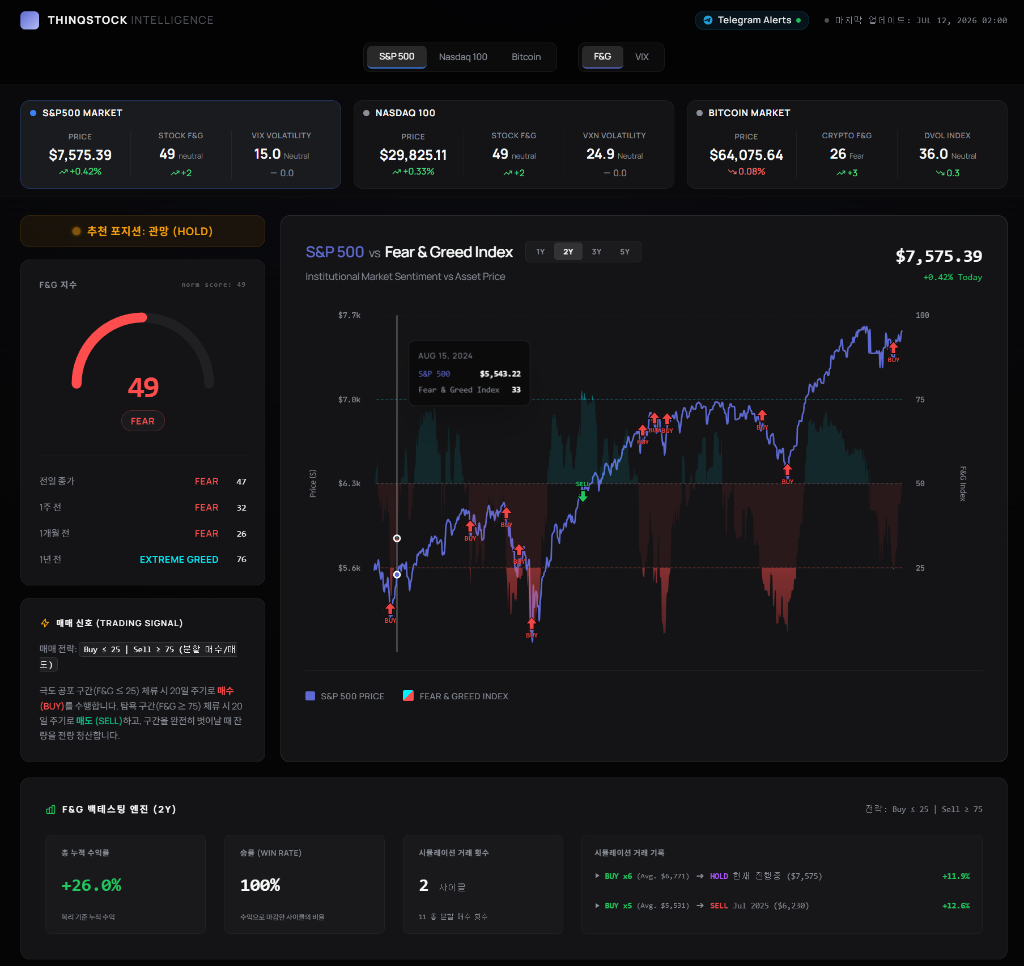
The Science of Contrarian Investing: Data Behind 'Buy Fear, Sell Greed'
Every experienced investor has heard the phrase "be fearful when others are greedy, and greedy when others are fearful." Warren Buffett popularized it, but the wisdom predates him by decades. What most people don't appreciate is that this isn't just a philosophical stance or a folksy aphorism — it's a quantitatively testable hypothesis with decades of empirical support. The data behind contrarian investing is more compelling than most investors realize, and the behavioral science explaining why it works is equally robust.
Contrarian investing is not about being a reflexive contrarian — doing the opposite of whatever the market does for the sake of being different. That approach is just as irrational as blindly following the crowd. True contrarian investing is a disciplined, evidence-based strategy grounded in the recognition that crowd sentiment regularly overshoots fair value in both directions, and that these overshoots are systematically exploitable by investors with the emotional discipline to act against the prevailing mood.
The Behavioral Finance Foundation
Contrarian investing didn't emerge from intuition — it emerged from decades of behavioral research showing that human beings are systematically bad at probabilistic reasoning in financial contexts. Three cognitive biases are particularly relevant to understanding why crowd sentiment repeatedly overshoots and creates contrarian opportunities.
Representativeness Bias
Daniel Kahneman and Amos Tversky's pioneering work in the 1970s and 1980s established that people judge the probability of future events based on how much they resemble recent experience rather than on base rates. After a year of strong stock market gains, investors dramatically overestimate the probability of continued gains — because strong markets "feel like" what strong markets do. After a sharp crash, they dramatically underestimate the probability of recovery — because the crash feels representative of what markets "do now." This representativeness bias is the engine that drives both extreme greed and extreme fear readings, and it's what creates the mean-reversion opportunities that contrarian investors exploit.
Herding Behavior
Humans are social animals. In environments of uncertainty — and financial markets are nothing if not uncertain — we look to the behavior of others for cues about the right course of action. This is herding behavior, and in financial markets, it amplifies price moves beyond what fundamentals justify. When everyone is buying because everyone else is buying, prices rise until they reach levels that can no longer be sustained by earnings growth or cash flow generation. When everyone is selling because everyone else is selling, prices fall to levels that imply economic scenarios far worse than what ultimately transpires. Both extremes are the contrarian investor's hunting ground.
Loss Aversion and the Pain Asymmetry
Kahneman and Tversky's prospect theory demonstrated that losses are felt approximately twice as intensely as equivalent gains. A $10,000 loss hurts about twice as much as a $10,000 gain feels good. This loss aversion drives investors to sell at precisely the wrong time — after a significant drawdown, when the emotional pain of holding is maximized, and the rational expectation of forward returns is most favorable. Contrarian investors effectively provide liquidity at these moments by taking the other side of forced or emotional selling.
"Be fearful when others are greedy and greedy when others are fearful." — Warren Buffett. The quote sounds simple. The execution requires you to act with maximum conviction precisely when you feel maximum doubt. That gap between knowing and doing is where most investors fail.
The Numbers: Forward Returns Following Extreme Readings
The theoretical case for contrarian investing is compelling. But the empirical case — the actual S&P 500 forward returns following extreme Fear & Greed readings — is what converts theory into actionable strategy. The following data covers historical periods where the Fear & Greed Index registered extreme readings, measured against subsequent S&P 500 total returns across multiple horizons.
| Sentiment Regime | F&G Score Range | 30-Day Avg Return | 90-Day Avg Return | 180-Day Avg Return | 365-Day Avg Return |
|---|---|---|---|---|---|
| Extreme Fear | 0–20 | +8.3% | +15.2% | +22.7% | +31.4% |
| Fear | 21–40 | +3.1% | +7.4% | +12.8% | +18.6% |
| Neutral | 41–59 | +1.8% | +4.2% | +7.6% | +10.2% |
| Greed | 60–79 | +0.4% | +1.9% | +3.1% | +7.8% |
| Extreme Greed | 80–100 | -2.1% | -4.8% | -1.2% | +5.3% |
The pattern is striking. At extreme fear (F&G below 20), the average 30-day forward return is +8.3% — more than four times the market's long-run monthly average of roughly 0.7%. By 90 days, the average forward return from extreme fear entries exceeds 15%. By one year, it's +31.4% — a return that, if consistently achievable, would compound to staggering wealth over time.
At extreme greed (F&G above 80), the picture reverses. The average 30-day return is -2.1%, and the 90-day return is -4.8%. The 180-day number recovers to a modest -1.2%, and by one year, even extreme greed entries show positive returns (+5.3%) — reflecting the reality that markets do tend to grind higher over time and that greed periods can last longer than short-sellers expect. But compared to the +31.4% available from extreme fear entries, the risk-reward of buying extreme greed is clearly asymmetric in the wrong direction.
The Crowd Psychology Cycle: Four Stages
To use contrarian investing effectively, you need a model of how crowd psychology evolves through a complete market cycle. The four-stage framework below maps investor psychology to price action in a way that explains both why contrarian opportunities emerge and where in the cycle you're likely to find the best risk-reward setups.
Stage 1: Disbelief (Post-Bottom)
After a significant market decline and during the early stages of recovery, the dominant sentiment is disbelief. Prices are rising, but investors don't trust the move. They remember the pain of the decline and fear another leg down. The crowd is underinvested relative to the rally that's happening in front of them. Fear & Greed readings in this phase are typically in the 25-40 range — fear territory — even as prices are making higher lows and higher highs. This is where contrarian investors who bought the extreme fear are seeing their positions work.
Stage 2: Hope and Optimism (Mid-Bull)
As the recovery extends and becomes undeniable, sentiment transitions from disbelief to hope. Investors who sat out the early recovery begin allocating. Financial media becomes incrementally more positive. Fear & Greed readings move into the 45-65 range. This is the most comfortable phase to be invested — sentiment is improving but not yet extreme. Contrarian investors are fully invested but beginning to pay attention to signs of excessive optimism.
Stage 3: Euphoria (Late Bull)
Euphoria is what extreme greed looks like in practice. Retail investor participation surges. Risky assets (small caps, high-beta stocks, speculative names) outperform significantly. Everyone has a story about making money. Financial media is relentlessly bullish. F&G readings push above 80 and stay there. This is the contrarian investor's sell zone — not because the market will crash tomorrow, but because the expected value of holding has deteriorated sharply relative to the entry point.
Stage 4: Panic (Bear Market)
The transition from euphoria to panic can be rapid and violent. What triggers it matters less than recognizing it when it arrives. F&G readings collapse toward 0-20. Investors who bought during euphoria are now selling at losses. Financial media turns apocalyptic. This is where the contrarian investor's discipline is most tested and most rewarded — the willingness to buy when everything feels like it's falling apart is exactly what the data says generates 31.4% average one-year returns.
Contrarian vs. Momentum Investing: When Each Works
Contrarian investing and momentum investing aren't opposites — they work on different time horizons and in different market conditions. Understanding when each approach has the edge prevents the common mistake of applying a contrarian lens to a momentum-driven market phase (or vice versa).
Momentum investing works best in the middle of a trend — Stage 2 and early Stage 3 in the framework above. When sentiment is improving from fear to neutral to greed, momentum strategies capture the directional move with good risk-adjusted returns. Contrarian investing works best at the extremes — when sentiment has reached levels that are statistically anomalous relative to the historical distribution. The skill is knowing which regime you're operating in.
A Practical Heuristic for Regime Identification
- F&G 0–25: Contrarian buy zone — favor contrarian strategies, scale into long positions
- F&G 26–45: Recovery phase — momentum begins to work, maintain long positions from extreme fear buys
- F&G 46–64: Neutral momentum — both approaches roughly equivalent, focus on fundamentals and position sizing
- F&G 65–79: Late momentum — momentum still works but risk management becomes critical
- F&G 80–100: Contrarian sell zone — reduce exposure, tighten stops, avoid adding to high-beta positions
When Contrarian Investing Fails
The data supports contrarian investing strongly — but the strategy does fail, and understanding when is essential for risk management. Three conditions make contrarian strategies particularly risky.
Structural bear markets: When extreme fear readings persist because of genuine fundamental deterioration (as in 2008-2009), contrarian buying at the first sign of extreme fear can lead to buying into continued declines. The 2008 crisis saw F&G readings in extreme fear territory for over 12 months. Averaging in across multiple extreme fear periods — rather than putting all capital to work at the first reading — is the risk management response to this failure mode.
Liquidity crises: During periods of acute systemic stress — when financial institutions are failing and credit markets are frozen — even historically oversold readings can become more oversold. The March 2020 "dash for cash" briefly pushed every sentiment signal to historical extremes, and investors who bought on the first extreme fear signal were down another 15% within a week before the Fed intervened. Position sizing and staged entry are the defenses against this.
Sector-specific versus broad market signals: A broad market Fear & Greed reading of 15 is a very different animal from one sector within a healthy market reaching extreme fear on sector-specific negative news. Contrarian investing based on broad market sentiment signals has a much stronger empirical track record than bottom-fishing in individual sectors experiencing fundamental deterioration.
Building a Rules-Based Contrarian System
The entire advantage of contrarian investing disappears if you can't actually execute the trades when the signal appears. The reason most investors know contrarian investing works but don't profit from it is behavioral: the moments of extreme fear feel so terrible that buying feels irrational, and the moments of extreme greed feel so rewarding that selling feels like leaving money on the table. A rules-based system removes the need to make emotional decisions in emotional environments.
A simple rules-based contrarian system might look like this: Maintain a defined equity allocation target (say, 70% of investable assets). For every 10-point drop in the F&G Index below 30, add 5% more equity exposure, funded by reducing cash or bond holdings. For every 10-point rise above 70, reduce equity exposure by 5% and hold the proceeds in cash or short-duration bonds. The system forces buying during fear and trimming during greed without requiring any judgment calls in the moment — just adherence to the pre-committed rules.
The ThinqStock factors page shows you exactly which components of the F&G Index are driving current readings — essential context for distinguishing between a VIX-driven fear spike (often short-lived and ideal for contrarian entries) and a multi-factor alignment in extreme fear (rarer, more severe, but also the highest-conviction contrarian entry points in the historical record).